

Author: Dr. Rochel Marie Lawson
In Ayurveda, wellness is not a destination. It is a daily practice — a set of rhythms you return to again and again, not because someone told you to, but because your body recognizes the rightness of it. This daily rhythm is called dinacharya, and it has been the foundation of Ayurvedic living for over 5,000 years.
Dinacharya is not a rigid schedule. It is a relationship with the cycles of the day — rising with the sun, eating with the seasons, moving with your energy, and resting when rest is needed. It is the antidote to the chaotic, overscheduled, always-on pace of modern life.
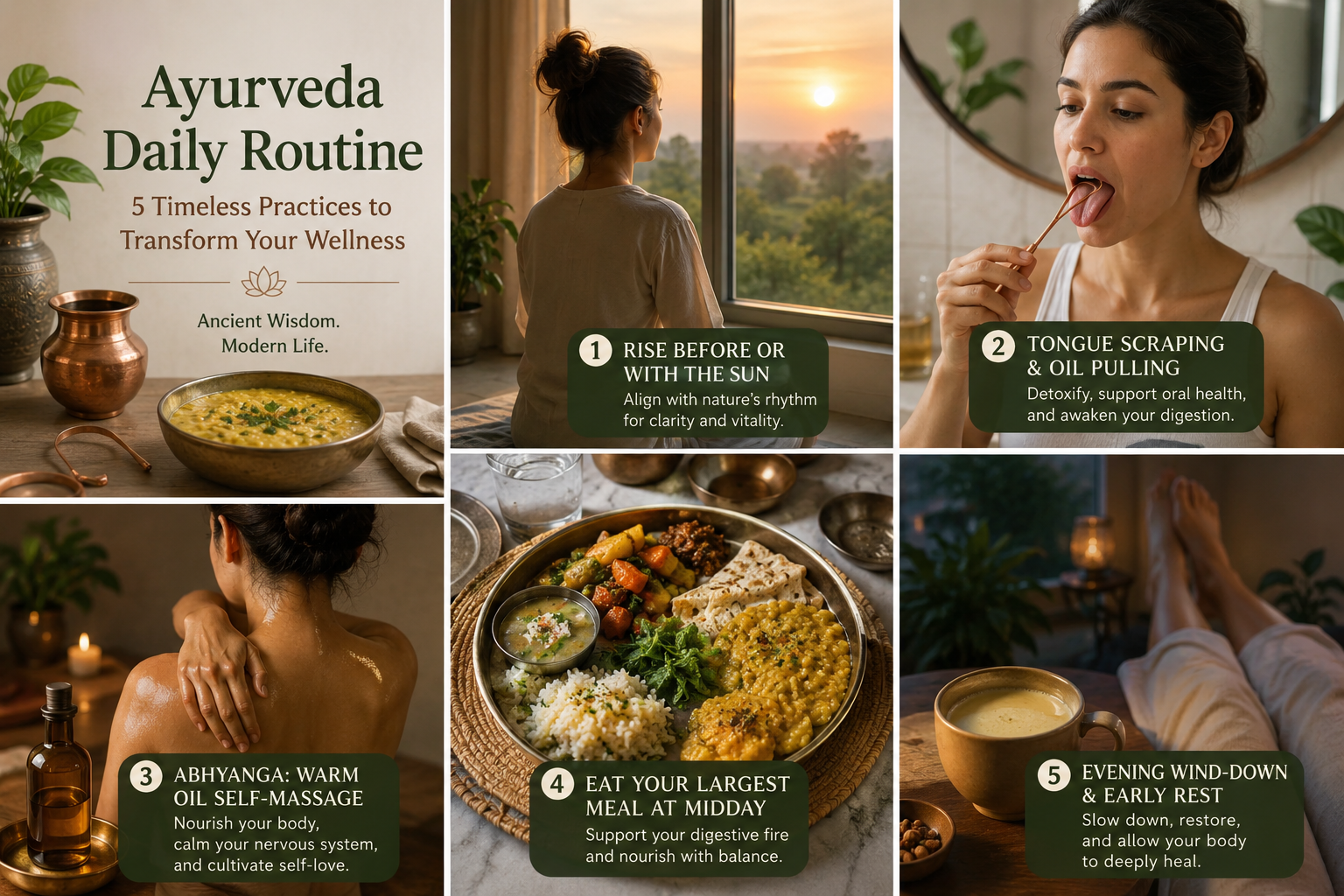
Five Core Dinacharya Practices for Modern Life
- Rise Before or With the Sun
The hours before sunrise carry a unique energetic quality. In Ayurveda, this period is governed by vata energy — light, clear, and expansive. Waking during this time supports mental clarity, creativity, and spiritual connection. If pre-dawn feels impossible, simply rising with the sun rather than after it shifts your entire circadian rhythm toward balance.
- Tongue Scraping and Oil Pulling
Before drinking or eating anything, scrape your tongue with a copper or stainless steel scraper (7–10 gentle strokes). This removes the ama that accumulates overnight and stimulates your digestive organs. Follow with oil pulling — swishing a tablespoon of coconut or sesame oil in your mouth for 5–15 minutes. This ancient practice supports oral health, detoxification, and immune function.
- Abhyanga: Warm Oil Self-Massage
Abhyanga is one of Ayurveda’s most nurturing practices. Warm sesame oil (for vata and kapha) or coconut oil (for pitta), and massage your entire body before bathing. Use long strokes on the limbs, circular strokes on joints. This calms the nervous system, nourishes the skin, supports lymphatic drainage, and is a profound act of self-love. Even 5 minutes creates a noticeable shift in how you feel.
- Eat Your Largest Meal at Midday
Ayurveda teaches that your digestive fire (agni) mirrors the sun. It peaks at midday and diminishes in the evening. Eating your largest, most complex meal between 12 and 2 p.m. supports optimal digestion and nutrient absorption. Keep dinner light and warm — soups, stews, simple grains — and eat at least 2–3 hours before sleep.
- Evening Wind-Down and Early Rest
Create a consistent evening ritual that signals your body it is time to transition from doing to being. Dim the lights. Turn off screens. Sip warm milk with a pinch of nutmeg and cardamom (a traditional Ayurvedic sleep tonic). Practice gentle stretching or legs-up-the-wall pose. Aim to be in bed by 10 p.m. — the transition from pitta time (10 p.m.–2 a.m.), when the body performs its deepest repair and detoxification.

Building Your Practice Gradually
You do not need to adopt all five practices at once. Choose the one that calls to you most and commit to it for 21 days. Once it becomes natural, add another. Ayurveda is patient. It meets you wherever you are and trusts that consistency, not perfection, creates transformation.
Reflection Prompts
- Which of these five practices feels most accessible to me right now?
- Where in my daily rhythm do I feel most out of alignment?
- What would it mean to treat my daily routine as a form of devotion rather than obligation?
Your Invitation
Dinacharya is not about doing it perfectly. It is about returning to the rhythm, again and again, with patience and love.
Blissful Living 4U’s Ayurvedic wellness programs help you build a personalized daily routine that honors your dosha, your season, and your life. Begin your dinacharya journey today.