Author: Dr. Rochel Marie Lawson
You take approximately 22,000 breaths every day. Most of them happen without your awareness — shallow, hurried, confined to the upper chest. But the moment you bring consciousness to your breath, something extraordinary happens: your nervous system shifts, your hormones recalibrate, your mind quiets, and your entire physiology changes within minutes.
This is pranayama — the ancient yogic science of breath regulation. Prana means life force. Yama means control or expansion. Pranayama is not simply “breathing exercises.” It is the deliberate cultivation of your vital energy through the breath. And for women carrying the weight of modern life, it may be the most accessible and powerful healing tool available.
How Breath Governs Your Nervous System
Your breath is the only autonomic function you can consciously override. Your heart rate, digestion, and hormonal production all operate below conscious control — but breath sits at the intersection of voluntary and involuntary. This means that by changing how you breathe, you directly influence your heart rate, blood pressure, cortisol levels, and emotional state. A slow exhale activates the vagus nerve, triggering the parasympathetic (rest-and-digest) response. A rapid, shallow breath activates the sympathetic (fight-or-flight) response. You are always choosing one or the other.
Four Essential Pranayama Practices
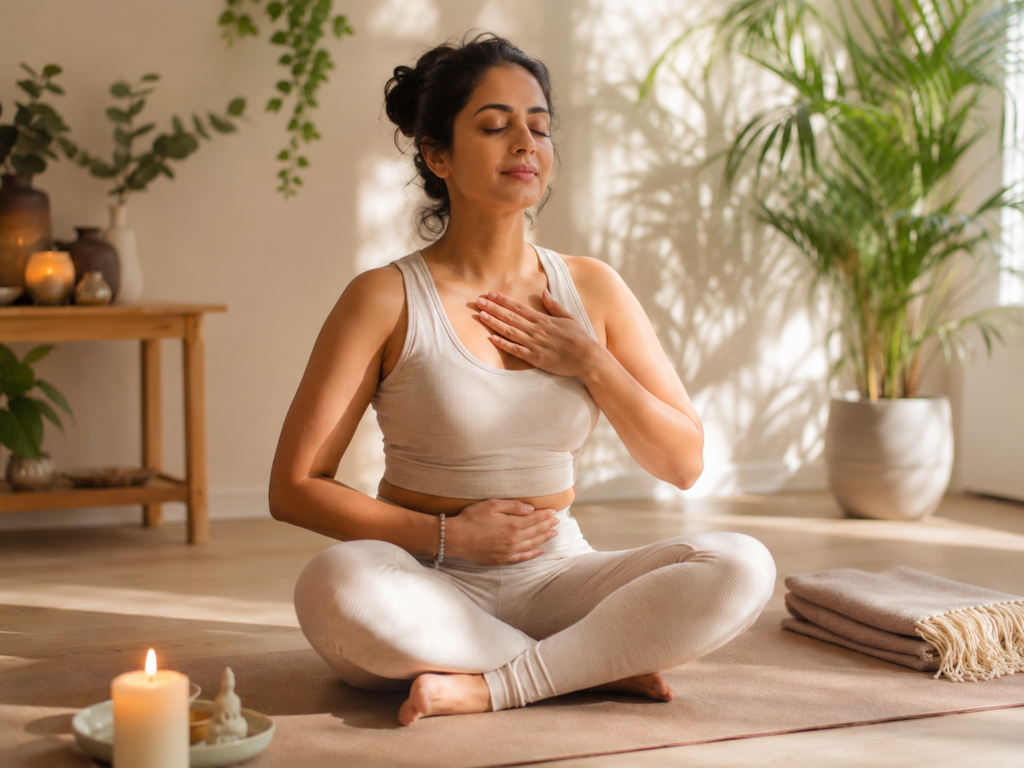
- Diaphragmatic Breathing (Foundation Practice)
Place one hand on your chest and one on your belly. Breathe in through your nose and direct the breath down into your belly so that your lower hand rises while your upper hand stays relatively still. Exhale slowly through your nose. Practice for 3–5 minutes. This is the foundation of all pranayama — it retrains your breathing pattern from chest-dominant to diaphragm-dominant, which reduces baseline anxiety and improves oxygenation.
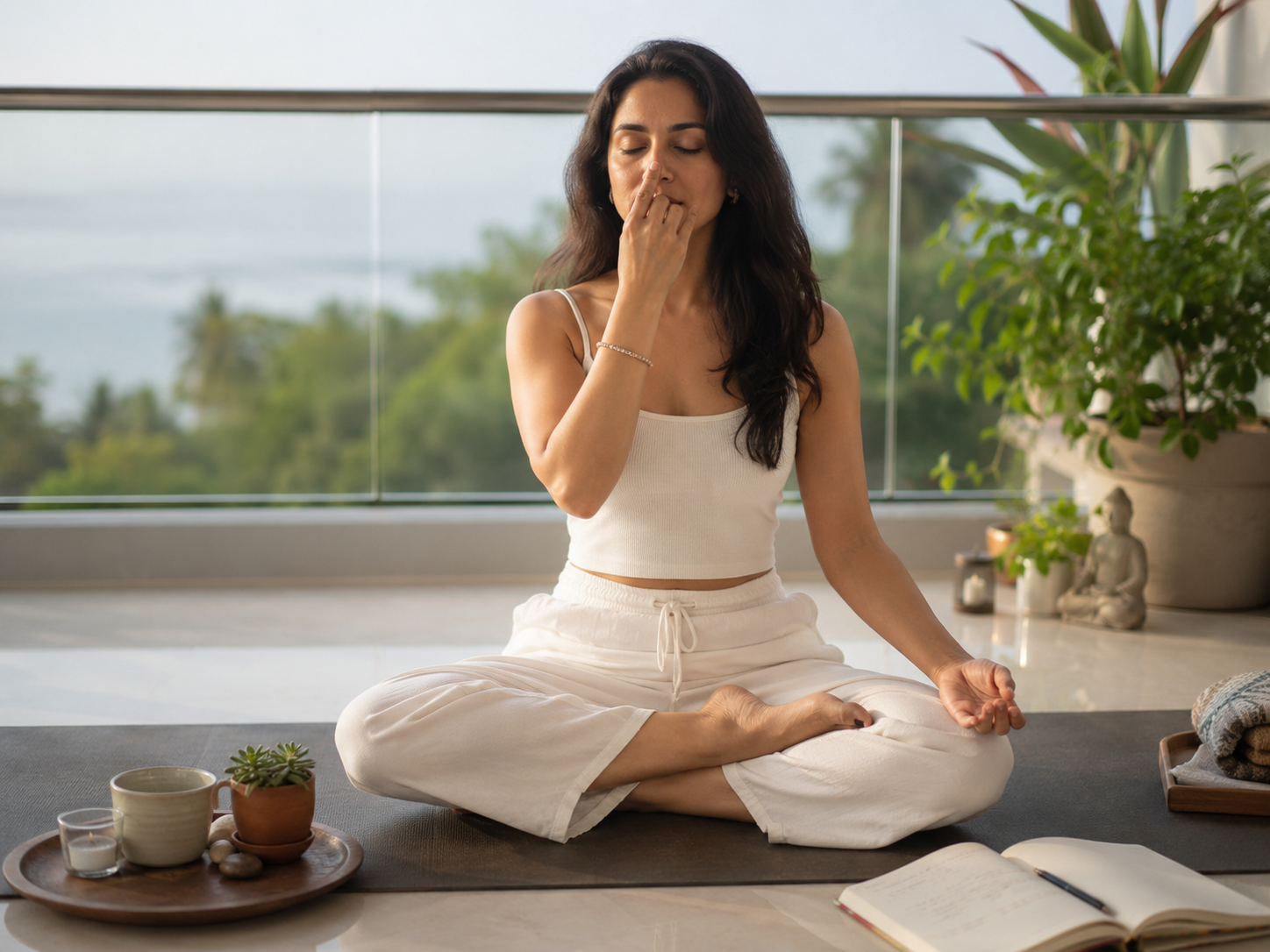
- Nadi Shodhana (Alternate Nostril Breathing)
Using your right hand, close your right nostril with your thumb. Inhale through the left nostril for a count of 4. Close the left nostril with your ring finger, release the right, and exhale through the right for a count of 4. Inhale through the right for 4. Close the right, release the left, exhale through the left for 4. This completes one cycle. Practice 5–10 cycles. Nadi Shodhana balances the left and right hemispheres of the brain, calms the nervous system, and creates a profound sense of equilibrium.
- Ujjayi Breath (Victorious Breath)
Slightly constrict the back of your throat (as if you were fogging a mirror with your mouth closed) and breathe in and out through your nose. The breath should create a gentle ocean-like sound. Inhale for a count of 4, exhale for a count of 6. Practice for 5–10 minutes. Ujjayi builds internal heat, strengthens focus, and activates the vagus nerve through the subtle vibration in the throat. It is especially powerful during yoga practice or moments of emotional intensity.
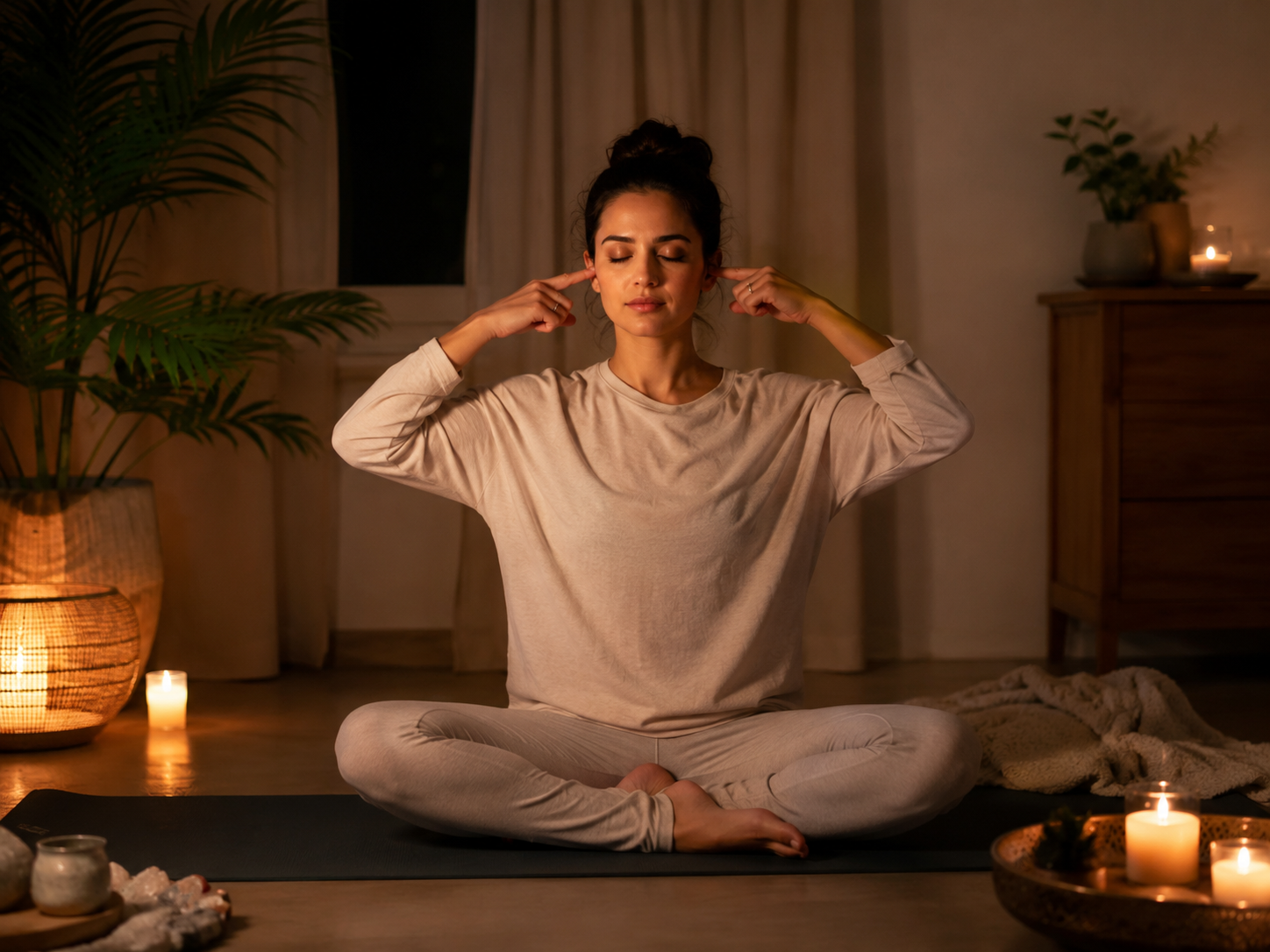
- Bhramari (Humming Bee Breath)
Close your eyes. Inhale deeply through your nose. On the exhale, close your lips and make a long, low humming sound — like a bee. Let the vibration fill your skull, your chest, your entire body. Practice 5–7 rounds. Bhramari is profoundly calming for the mind. Research shows it reduces blood pressure, decreases heart rate, and releases nitric oxide in the sinuses, supporting immune function and respiratory health.
Building a Daily Breathwork Practice
You do not need an hour. You need three minutes of conscious breathing to shift your state. Build a micro-practice into your day: 3 minutes of diaphragmatic breathing upon waking, Nadi Shodhana before a stressful meeting, Ujjayi during your yoga practice, Bhramari before bed. Over time, conscious breathing becomes your default — and your relationship with stress transforms fundamentally.
Reflection Prompts
- When I am stressed, where do I notice my breath — shallow in the chest, held, or rapid?
- Which pranayama technique do I feel most drawn to try first?
- What would change if I paused three times a day for conscious breath?
Your Invitation
Your breath is always with you. It costs nothing. It requires no equipment. And it has the power to shift your entire physiology in under two minutes.
Blissful Living 4U’s breathwork and pranayama programs offer guided instruction for women ready to harness the full power of their breath. Breathe your way back to yourself.